
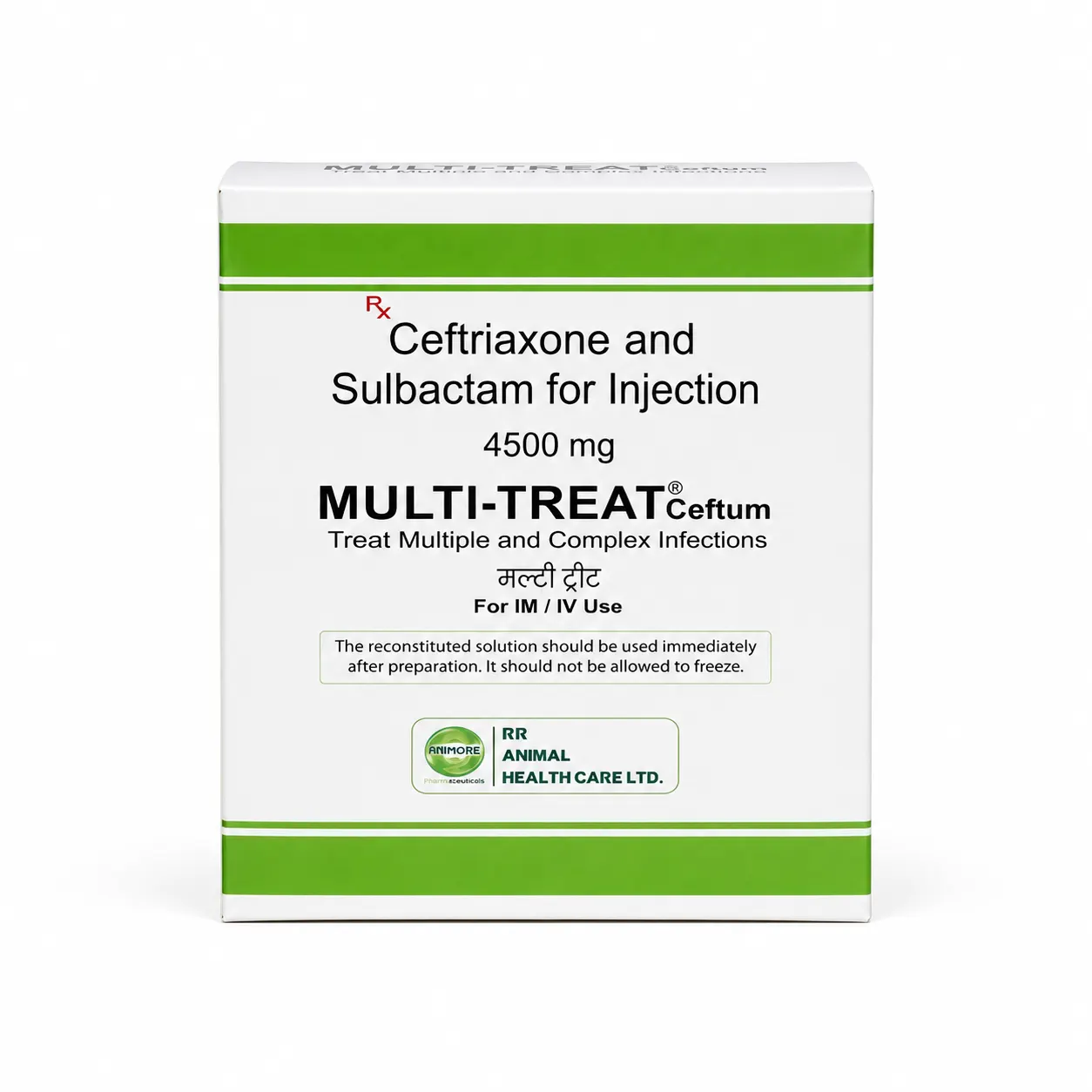
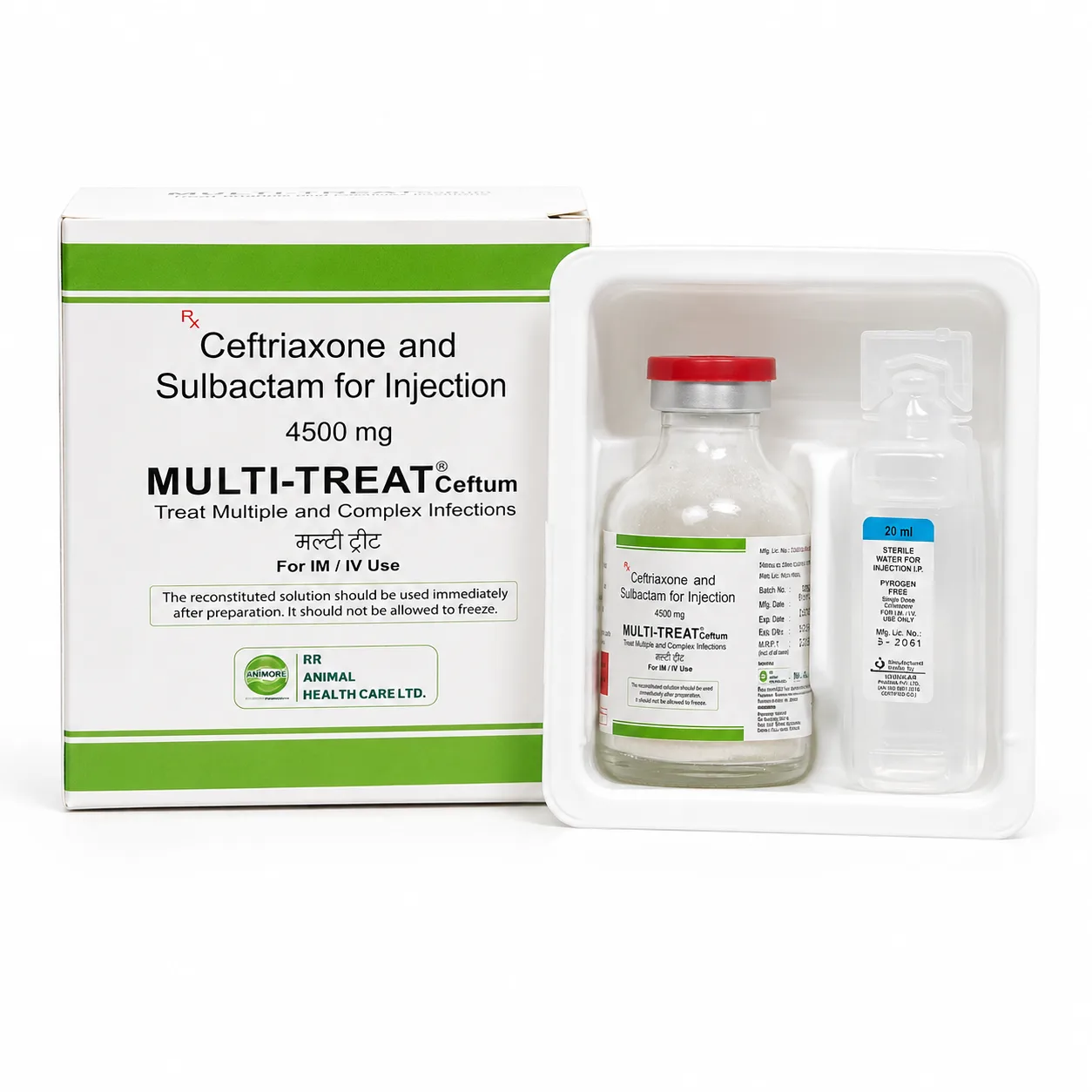
Injection - MULTI-TREAT CEFTUM
A combination antibiotic injection formulated with ceftriaxone and sulbactam to support the treatment of multiple and complex bacterial infections in livestock under veterinary supervision.
Ceftriaxone sodium I.P. equivalent to anhydrous ceftriaxone 3.0 g; Sulbactam sodium I.P. equivalent to sulbactam 1.5 g
Frequently Asked Questions
Why is MULTI-TREAT Ceftum a useful ceftriaxone–sulbactam combination for selected complex infections?
MULTI-TREAT Ceftum combines ceftriaxone with sulbactam, a beta-lactamase inhibitor, extending activity against certain beta-lactamase-producing bacteria in complex infections.
How can sulbactam support ceftriaxone against bacteria producing certain beta-lactamases?
Sulbactam inhibits some bacterial beta-lactamases, protecting ceftriaxone from degradation and restoring or enhancing its antibacterial activity.
What types of multiple or complicated infections may require this combination?
MULTI-TREAT Ceftum may be considered for severe or mixed infections, including respiratory, systemic, reproductive, urinary, or postoperative infections, where resistant or multiple pathogens are suspected.
Which veterinary species can receive MULTI-TREAT Ceftum?
The product is intended for veterinary species as specified by the veterinarian and label.
What dosage should the veterinarian prescribe?
Dosage must be determined by a veterinarian based on species, body weight, infection severity, and susceptibility patterns.
Should the product be given intramuscularly or intravenously?
MULTI-TREAT Ceftum can be administered intramuscularly or intravenously, as directed by a veterinarian.
How should the 3 g ceftriaxone and 1.5 g sulbactam vial be reconstituted?
Reconstitute with the recommended diluent under aseptic conditions, mix gently, and use as per label instructions regarding stability and administration.
What precautions apply to allergic animals and concurrent antimicrobial therapy?
Avoid in animals with known hypersensitivity to cephalosporins or penicillins; use caution with concurrent nephrotoxic or ototoxic drugs.
What withdrawal and antimicrobial-resistance considerations apply?
Observe withdrawal periods for food animals and reserve this combination for cases where benefits outweigh risks, guided by culture/sensitivity where possible.
How should the product be stored and handled?
Store in a cool, dry place, protected from light. After reconstitution, follow label instructions for storage and discard any unused portion as directed.