
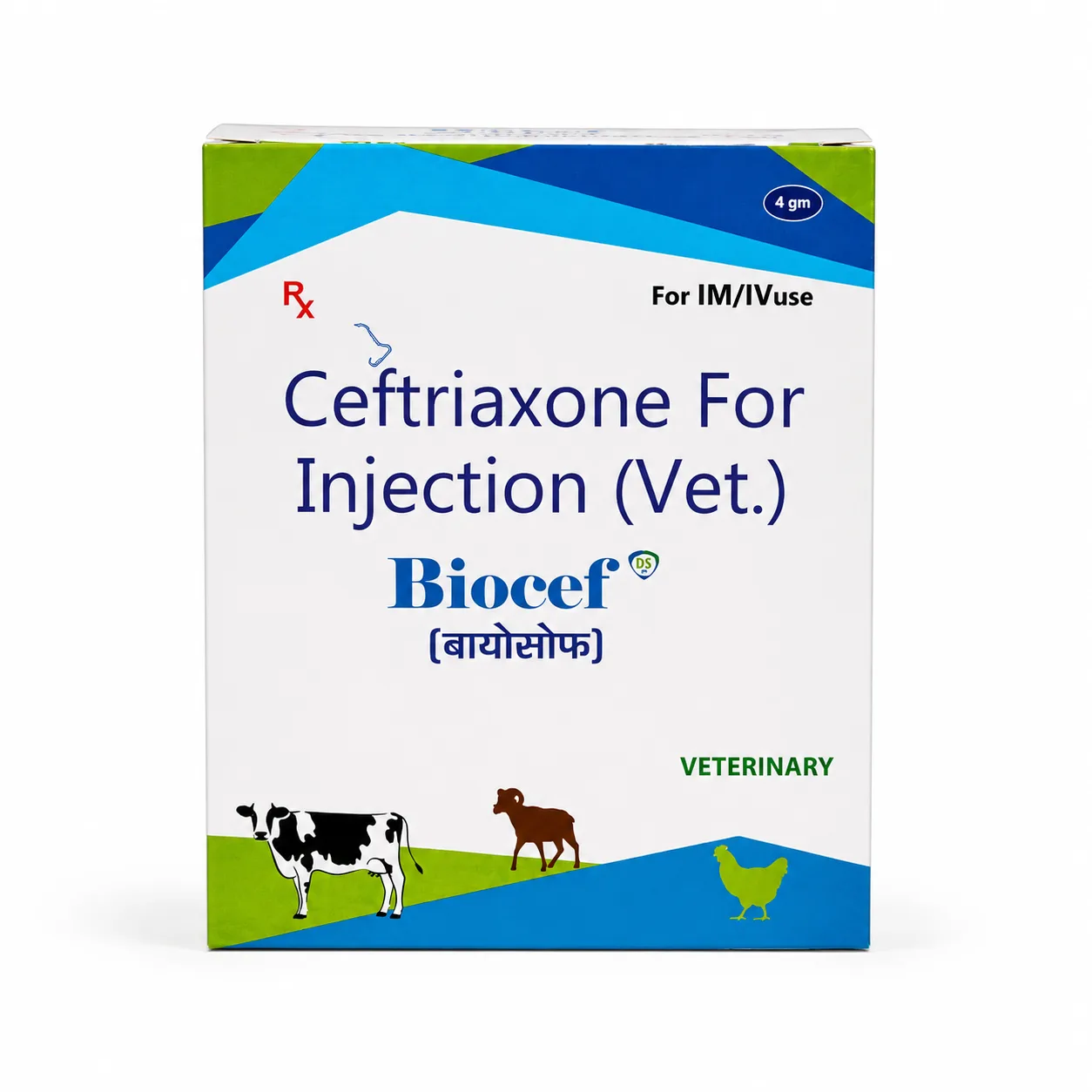
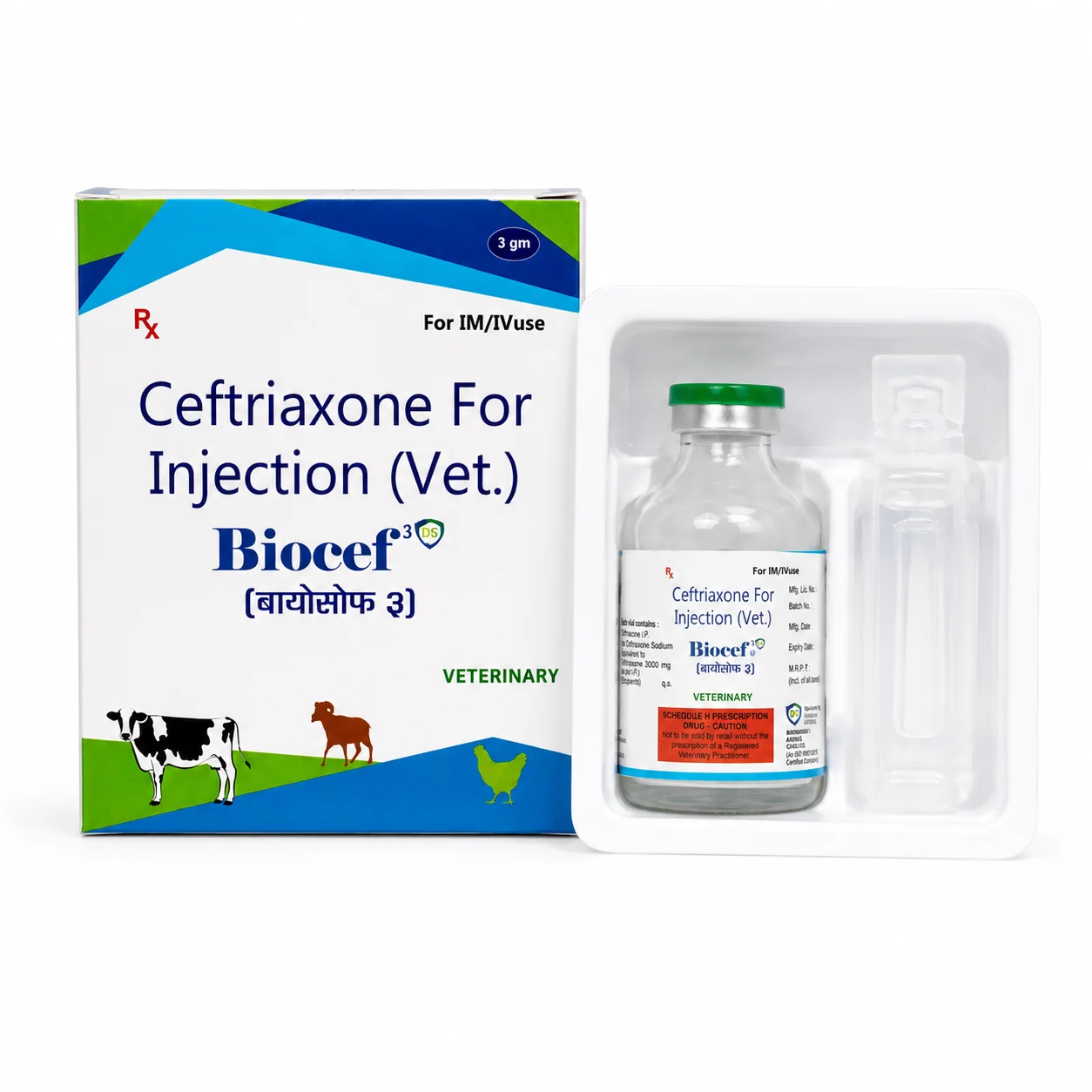


Injection - BIOCEF
A broad-spectrum ceftriaxone antibiotic injection formulated for veterinary use to help manage a wide range of bacterial infections, including respiratory, reproductive, urinary, joint, wound, and secondary infections in livestock and companion animals.
Ceftriaxone sodium I.P. equivalent to ceftriaxone 500 mg per 500 mg vial; 3000 mg per 3g vial
Frequently Asked Questions
Why is Biocef a useful ceftriaxone injection for serious or complex susceptible bacterial infections?
Biocef contains ceftriaxone, a third-generation cephalosporin with broad-spectrum activity against many Gram-negative and some Gram-positive bacteria, suitable for severe infections.
How does ceftriaxone support the treatment of respiratory, reproductive, mammary, urinary, systemic, and postoperative infections?
Ceftriaxone inhibits bacterial cell-wall synthesis, leading to bacterial death in susceptible organisms, thereby helping resolve infections in various organ systems.
Which conditions may be treated with Biocef under veterinary supervision?
Biocef may be used for bronchopneumonia, pneumonia, otitis media, septicaemia, mastitis, nephritis, endometritis, foot rot, and postoperative infections, where organisms are susceptible.
Which species can receive Biocef?
Biocef is intended for cattle, buffalo, calves, sheep, goats, dogs, and horses, as specified on the label.
What are the listed weight-based dosage ranges for different species?
Cattle/buffalo: 5–10 mg/kg body weight IM/IV. Calves/sheep/goats: 2–10 mg/kg. Dogs/horses: 15–25 mg/kg. Exact dose and route must be determined by a veterinarian.
Should Biocef be administered by the intramuscular or intravenous route?
Biocef can be given intramuscularly or intravenously, depending on the case, species, and veterinary judgment.
How should the vial be reconstituted and handled?
Reconstitute with the recommended diluent under aseptic conditions, use immediately or as per stability instructions, and discard any unused portion according to label guidance.
What precautions apply to animals with beta-lactam allergy or kidney and liver concerns?
Use with caution or avoid in animals with known cephalosporin or penicillin hypersensitivity; adjust dosing or monitor carefully in animals with renal or hepatic impairment.
What withdrawal periods and antimicrobial-stewardship requirements must be considered?
Observe specified withdrawal periods for food-producing animals and use ceftriaxone only when indicated, based on culture/sensitivity or strong clinical justification.
How should Biocef be stored before and after reconstitution?
Store vials in a cool, dry place, protected from light. After reconstitution, follow label instructions for storage and use within the specified time.