
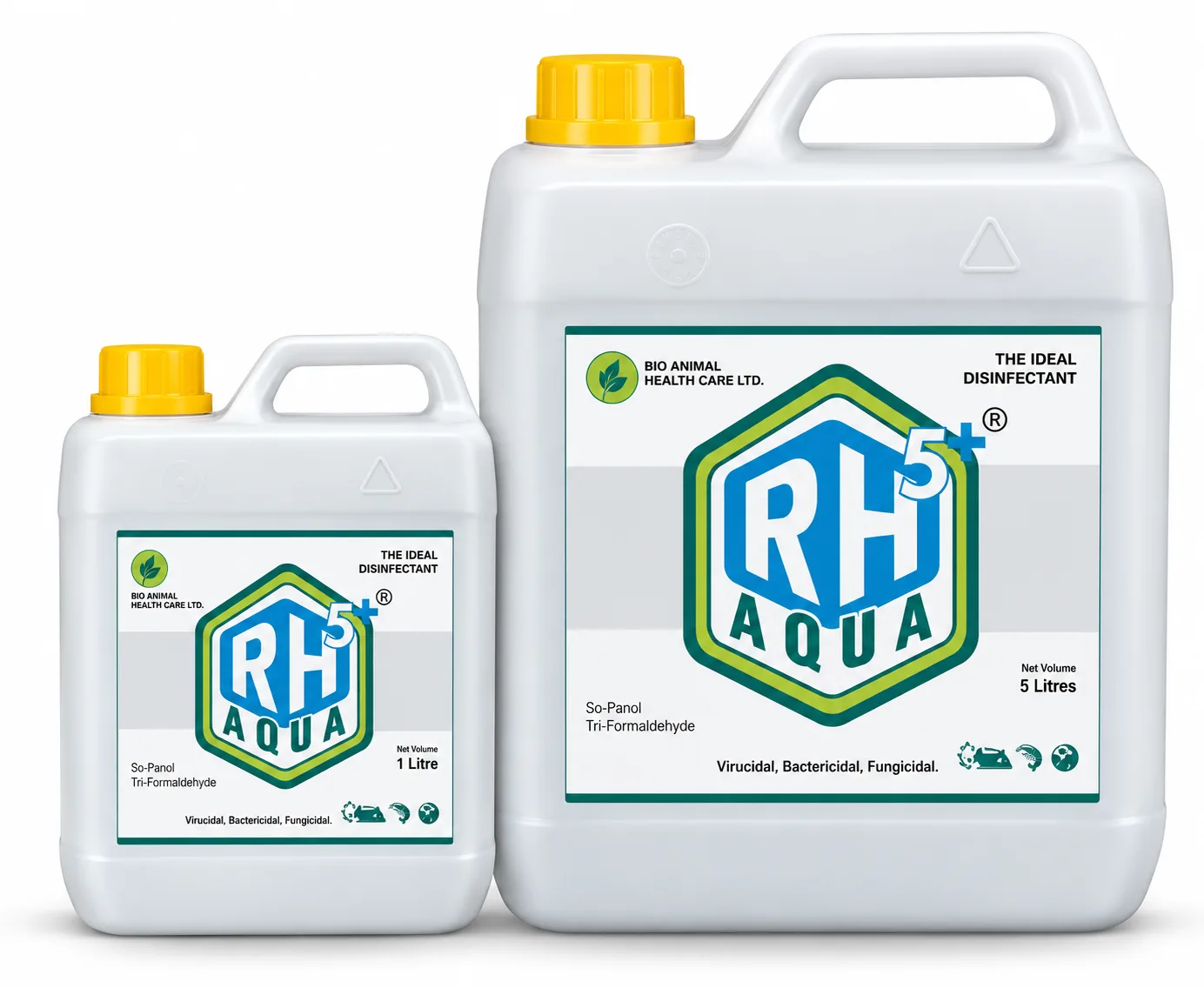
RH 5+ AQUA
Virucidal, Bactericidal, Fungicidal.
A broad-spectrum aquaculture sanitizer with virucidal, bactericidal, fungicidal, and algicidal activity, designed to help control major pathogens, improve pond hygiene, and support a healthier aquatic environment.
1000 ml contains: Di-Decyl Di-Methyl Ammonium Chloride 18.75 g, Di-Octyl Di-Methyl Ammonium Chloride 18.75 g, Di-Decyl Di-Methyl Ammonium Chloride 37.50 g, Alkyl Di-Methyl Ammonium Chloride 50 g, Glutaraldehyde 62.50 g, Pine Oil 20 g, Terpineol 20 g, *AOI, ZOI 50% NT 50%.
Frequently Asked Questions
What is RH AQUA?
It is an ideal, high-performance sanitizer formulated specifically for commercial aquaculture biosecurity.
What pathogens does it target?
It has proven, broad-spectrum activity against viruses, bacteria, fungi, and pathogenic algae.
Is it safe for the cultured stock?
Yes, when used at the recommended dosages, it is highly effective against pathogens while remaining completely safe for fish and shrimp.
How does it differ from harsh chemicals like bleaching powder?
It is less corrosive, more stable, and leaves no toxic residues that alter water parameters drastically.
When should RH AQUA be applied?
It should be used during pond preparation, during routine water hygiene maintenance, or immediately at the first sign of a pathogen outbreak.
Does it help control external parasites?
Yes, its sanitizing action effectively reduces the load of external fouling organisms and protozoan parasites on animal shells/gills.
How is it applied to the pond?
It is diluted in a large volume of clean water and splashed evenly across the pond surface with aerators running to ensure uniform mixing.
Does it affect the dissolved oxygen levels?
It does not directly deplete oxygen, though it is best applied in the morning to allow natural stabilization.
Can it be used in shrimp hatcheries?
Yes, its clean safety profile makes it highly suitable for sanitizing hatchery tanks, pipes, and equipment.
How frequently should it be used as a preventative?
Applying it once every 2 to 3 weeks helps keep pathogenic microbial loads below dangerous thresholds.