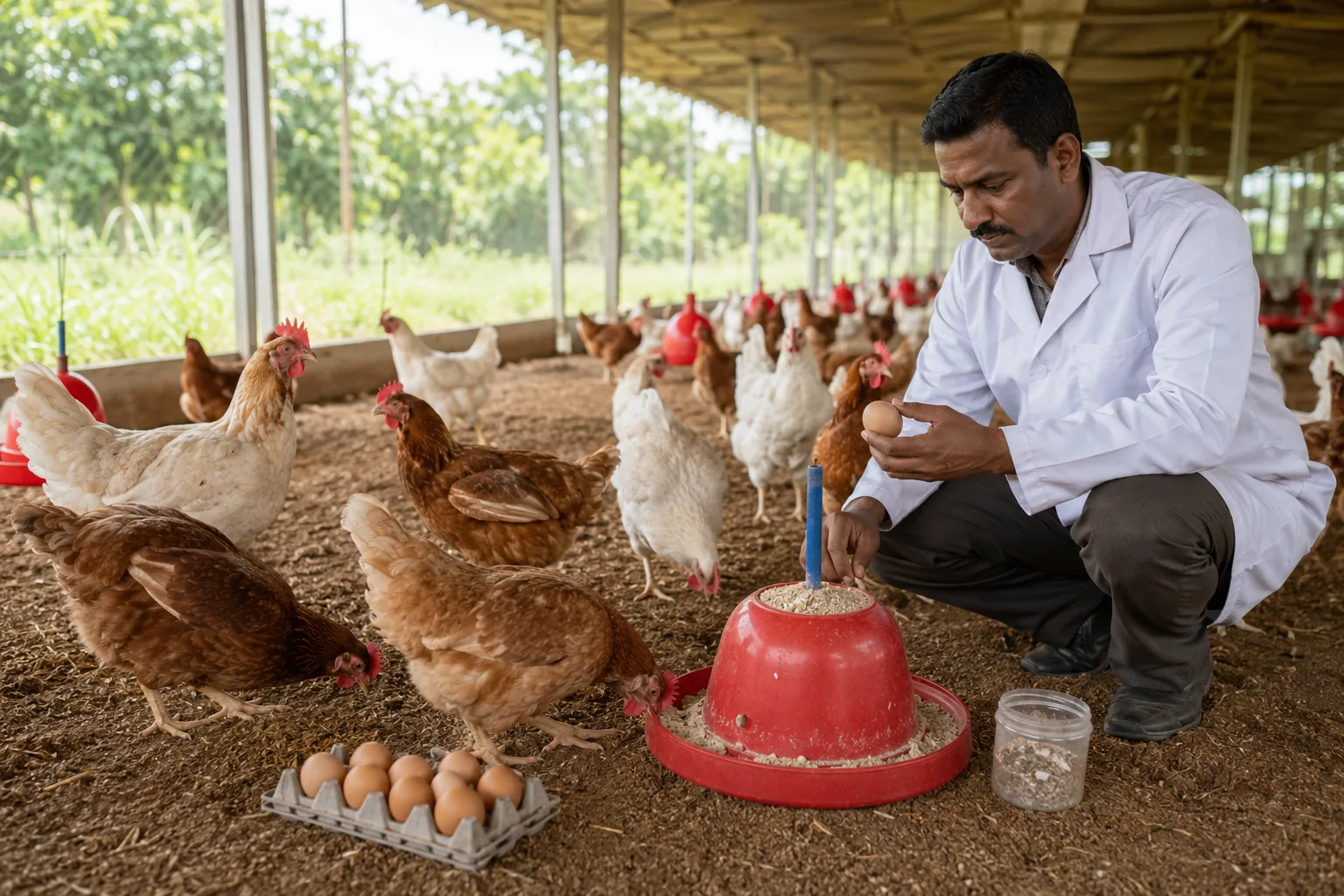
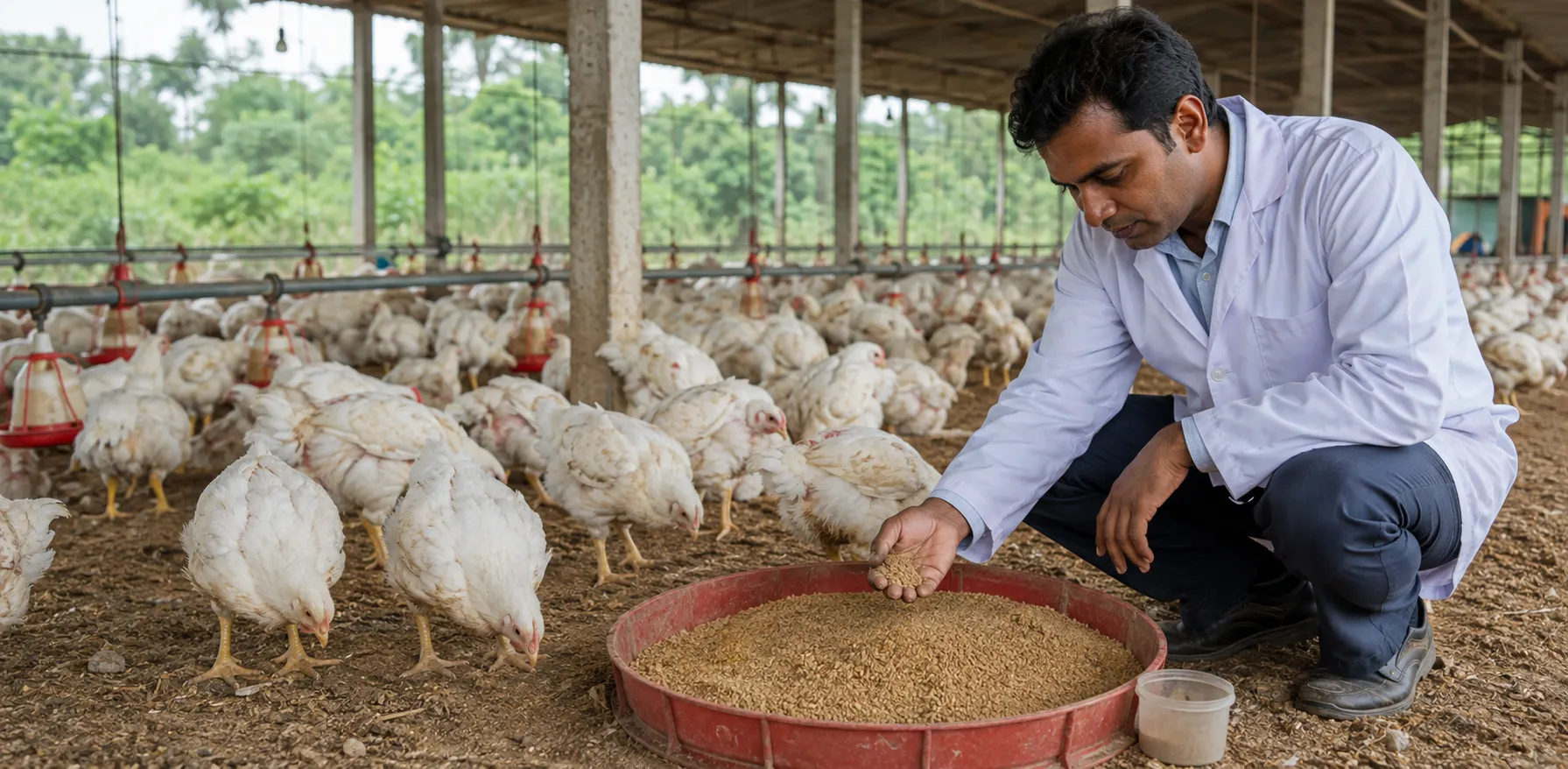
In the nutrition of poultry, vitamins and minerals are crucial micronutrients. They are important for growth, immunity, reproduction, bone formation, metabolism, and general flock performance, although being needed in comparatively minimal quantities. Therefore, for healthy birds and effective chicken production, a balanced diet with sufficient vitamins and minerals is crucial.
Role of Vitamins:
Vitamins are organic substances needed for a number of physiological and metabolic processes. They can be broadly divided into two categories: water-soluble vitamins (B-complex and C) and fat-soluble vitamins (A, D, E, and K). Vision, immunity, growth, and the integrity of epithelial tissue all depend on vitamin A. Deficiency may result in poor growth, reduced feed efficiency and increased susceptibility to infections.
Vitamin D3 is essential for calcium and phosphorus metabolism, proper bone formation and eggshell quality, particularly in laying birds. Vitamin E acts as an important antioxidant and supports immune function, reproductive performance and protection of cell membranes. Vitamin K is involved in normal blood clotting.
The B-complex vitamins, including thiamine, riboflavin, niacin, pantothenic acid, pyridoxine, folic acid and vitamin B12, are essential for energy metabolism, nervous-system function, blood formation and growth. Vitamin C, although birds can generally synthesize it, can be beneficial during periods of heat stress, disease challenge and other stressful conditions.
Role of Minerals:
Minerals are inorganic nutrients and are generally divided into macro-minerals and micro minerals (trace minerals). Important macro-minerals include calcium, phosphorus, sodium, potassium, magnesium, chlorine and sulphur. Calcium and phosphorus are particularly important for skeletal development, muscle function and eggshell formation. In layers, an appropriate calcium supply is critical for producing strong, good-quality eggshells. Sodium, potassium and chloride help maintain electrolyte balance, acid-base balance and normal nerve and muscle function.
Trace minerals such as zinc, manganese, iron, copper, iodine and selenium are required in smaller quantities but have significant biological functions. Zinc and manganese support bone development, enzyme activity and tissue integrity. Iron is essential for haemoglobin formation, while iodine is required for thyroid hormone production. Selenium works with vitamin E in antioxidant defence and supports immunity and reproductive performance.
Why They Matter in Poultry Production:
Deficits in vitamins and minerals can cause poor growth, decreased feed efficiency, weak bones, poor feathering, weakened immunity, decreased egg output, poor eggshell quality, and reproductive issues. Excessive supplementing, however, can also be detrimental and unnecessarily raise feed expenses. As a result, supplementing should be determined by the bird's age, stage of production, genetics, diet ingredients, environmental factors, and challenges related to illness or stress.
Conclusion:
Vitamins and minerals are fundamental components of a successful poultry nutrition program. They do not directly provide significant energy, but they enable the bird to efficiently utilize nutrients and maintain normal physiological functions. A well-balanced vitamin and mineral program supports growth, immunity, reproduction, egg and meat quality, and ultimately improves flock health and profitability.
Dr. Mahesh Nagnath Panchal
MVSc. Microbiology
Regional Technical Manager.
RR Animal Health Care Limited